The Year I Spent ₹3.77 Lakhs on Things I Didn't Need (And the Survival Frugality I'm Still Unlearning)
I sat down with a pen, a notebook, and a year of online receipts. The number was ₹3.77 lakhs. Here's what was actually underneath it.

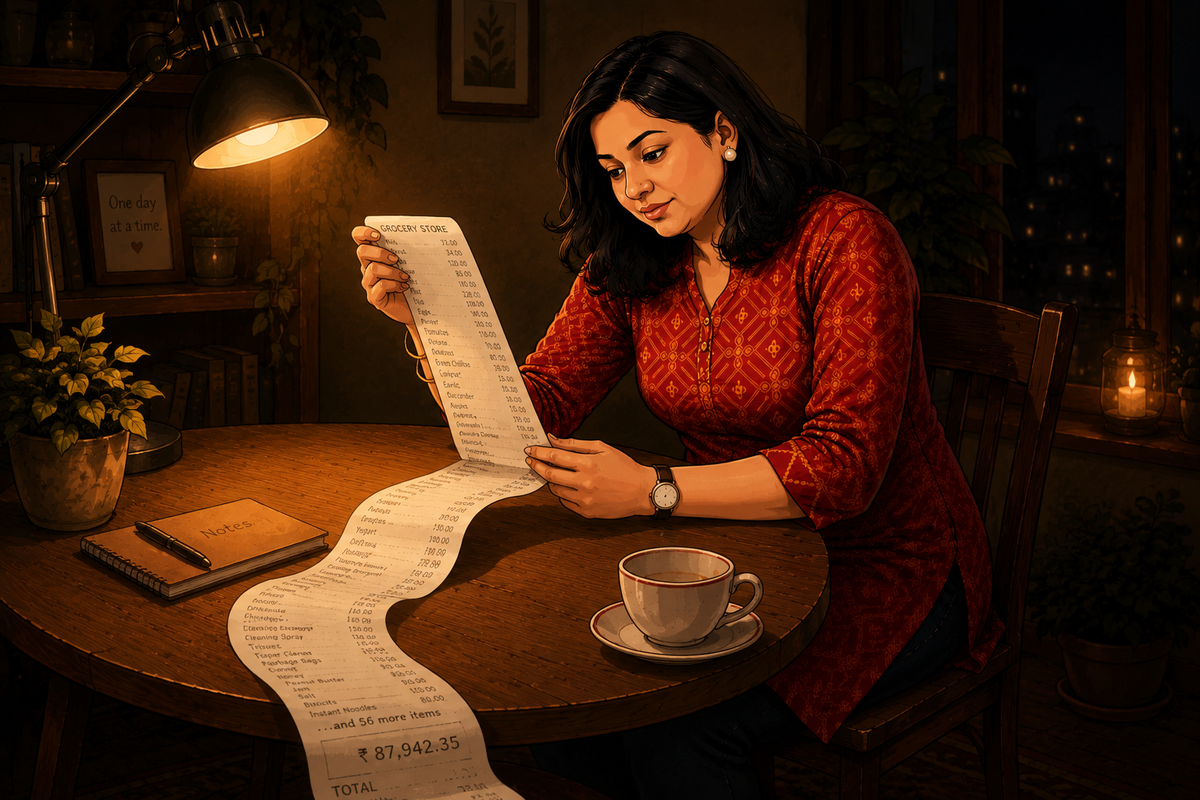
₹3.77 lakhs. I read the number twice. I closed the book where I was calculating this to convince myself that all purchases were legit and needed. I opened the book again only to wince at the sheer amount that resulted from totalling the purchases of all months. I refused to accept that this was the amount I had spent on things I don't even use anymore. What boggled me more was that this did not even include the dine-outs or food deliveries we had in 2025. It hurt to admit that this was a pattern all year long for many years now.
Cristina Mychas on YouTube talks a lot about decluttering and being debt-free, and one of her videos made me curious about my own number. During the Christmas week last December, with only a pen, notebook, and my mobile to look through the purchases, I started jotting down the numbers roughly. I was using an expense-tracking app at this point, but it wasn't helping me realise my shopping patterns or look at categories holistically. More than redemption or salvage, I was curious. I wanted to know the lucky number.
In this post:
- The Christmas-week audit that gave me the number.
- The childhood pattern that kept me spending even when I knew better.
- And the system I'm still building this year — because no-buy months don't work for someone who grew up in survival frugality.
It's raining buckets
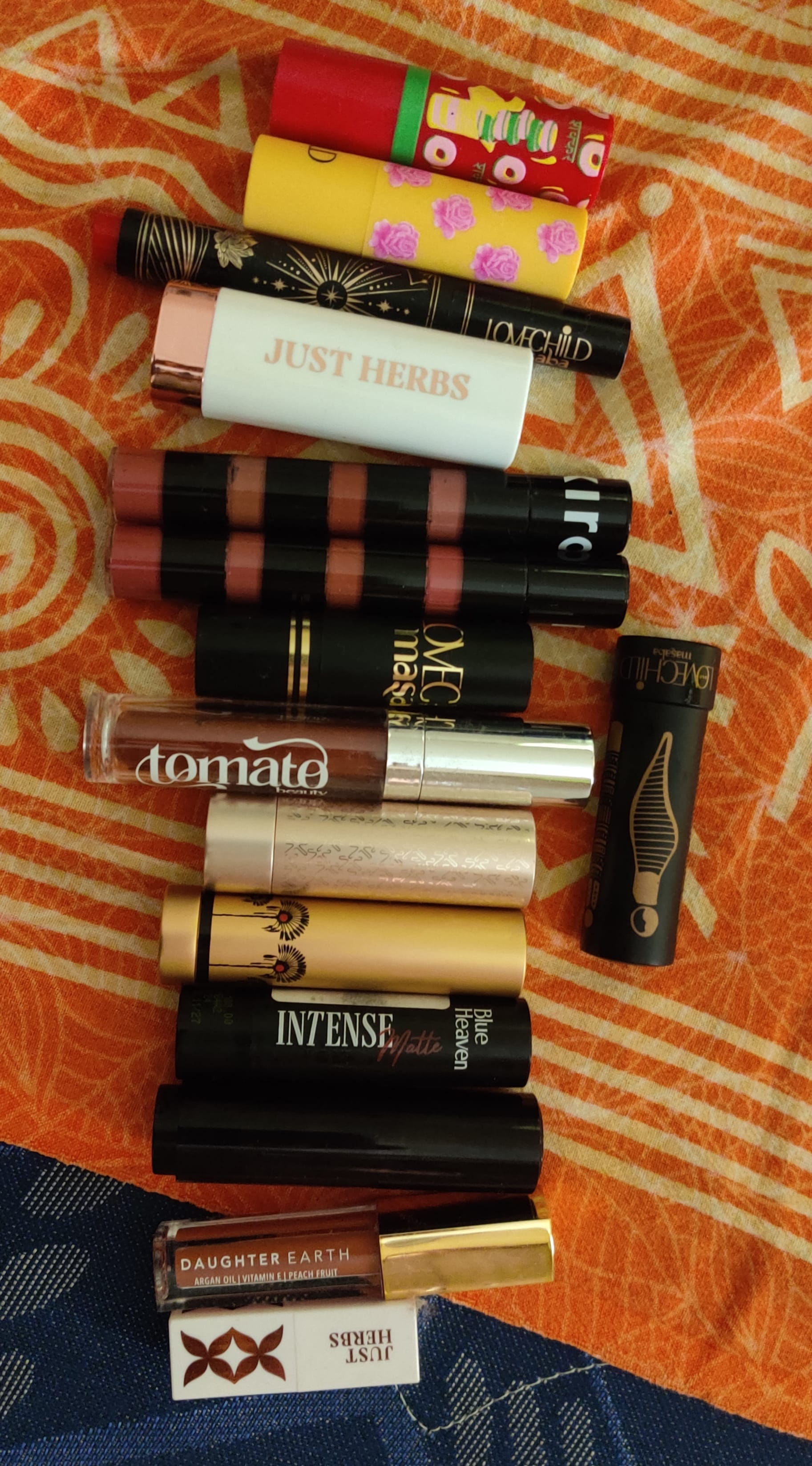
In 2025, I was on a mission to buy lipsticks only from Indian brands. I browsed, researched and bought every lipstick I could buy according to my skin tone and ingredients. I was proud of my collection. By the end of the year, I couldn't even use half of the lipsticks and let them dry out. Two times, I gave in to my urge to rebuild my skin care routine and spent thousands on products that further damaged my skin. The cosmetic collection and skin care products were not just plastics and chemicals, but a way to show the world a sassy, confident version of a person I never was.
I bought almost every book a stranger on Goodreads recommended. The desire to hold freshly printed books and show off on social media had a stronger pull than the desire to read the books already collecting dust on my bookshelf. I was buying books to reach my teenage self, who could read seven of them in a week. I had forgotten she had time, quiet, and no phone in her hand.
I bought wooden side cabinets on a whim after one look at someone's home on Pinterest. I bought clothes that made me feel uncomfortable in my own body, without a second thought. I barely noticed the fabric, the stitching quality, and the size and shape of the clothing item. I bought household items from sponsored videos only to never open them. I was buying my dream life without realising that the present life needs to be lived first. I wanted my choices to scream elegance, abundance, and paisa.
Artisanal grocery items ended up in the dustbin because I forgot to use them. And my inspiration for buying gourmet items? To experience the luxury of it all and show it off on social media, all the while being unhappy with every bite I took.
Hard-earned money all spent on garbage I would never use.
Inherited Patterns or Foolishness?
When I was shopping like a mad person last year, I had gone through the realisation many times. The realisation that I would not have any money left by the last week of the month. The realisation that I was spending on shopping by taking out the money from the grocery budget. The realisation that I would need to break my savings to get by the last few days of the month before my salary came through. Only to repeat the cycle every month. But why did I never stop myself then? The answer is more complicated than it seems.
I grew up watching my parents argue every single day over money. It would be a hand-to-mouth situation every month. My brother and I received a pair of new clothes during Durga Puja each year and had to make do with whatever clothes we had for the remainder of the year. Style and fashion were never part of our wardrobe, nor were clothes that looked and felt good, that had a slightly higher price range.
My parents bought furniture from local stores with no guarantee of quality and zero comfort. It was all about need versus budget. That's it. Good-quality serveware and cutlery would shine proudly inside the showcase with glass doors, never to be used to serve food for us.
I call this survival frugality, where every single monetary decision is made based on surviving a particular month with no guarantee of the future. Where you know that you don't have any savings in your bank account to be able to afford a bit of flexibility. This is what I lived and breathed for 22 years of my life.
You may also want to read - How I Started Unlearning My Parents' Patterns at Work (What Actually Helped)
I never received any financial lessons while growing up, nor were there any personal finance topics in the school/college curriculum. The only lesson I got was how to survive by observing my parents manage their monthly income.
The moment I started earning, all I wanted to do was fill the void. The void created by this survival frugality mindset unsettled my reality. I started hating my existing clothes and admiring my colleagues' outfits, secretly dreaming of owning an elaborate wardrobe which would give me options to wear different clothes every single day. And I did fill the void. Only to end up with appalling credit card debt, zero additional savings and hating my clothes, only to repeat the cycle.
The same happened for all other aspects of my life. All I wanted was to pick a path different from what my parents chose - to have nicer furniture, high-grade pantry items and whatnot. Every single decision I made to buy something was triggered either through my childhood memories or through peer/social media comparisons.
In hindsight, I could have chosen a different path. I could have taken a balanced approach. I could not have been influenced by my peers' suggestions or how they dressed or looked to impress others. I was good at applying critical thinking at work, so why didn't I apply it in my financial decisions? Why would my mind blank out at the thought of shopping?
I am ashamed to admit that the joy of opening a new box every few days had started to become an addiction for me. Ten seconds of feeling awesome was enough fuel for the next purchase. My mind kept justifying - next month's salary will come anyway, what's the big deal? I had to buy those books or clothes on sale, as if my life depended on it.
What appeared as financial mismanagement was, in truth, the outcome of intersecting forces—social structures, childhood imprinting, and inherited scarcity-mindset habit—quietly compounding into decline.
How the numbers became too real to ignore
- The first step was the realisation itself that happened each time I went shopping. The nagging feeling that wouldn't go away is what propelled me to at least start somewhere. These collective realisations are far more important than anything else before we even begin to change any pattern in our lives.
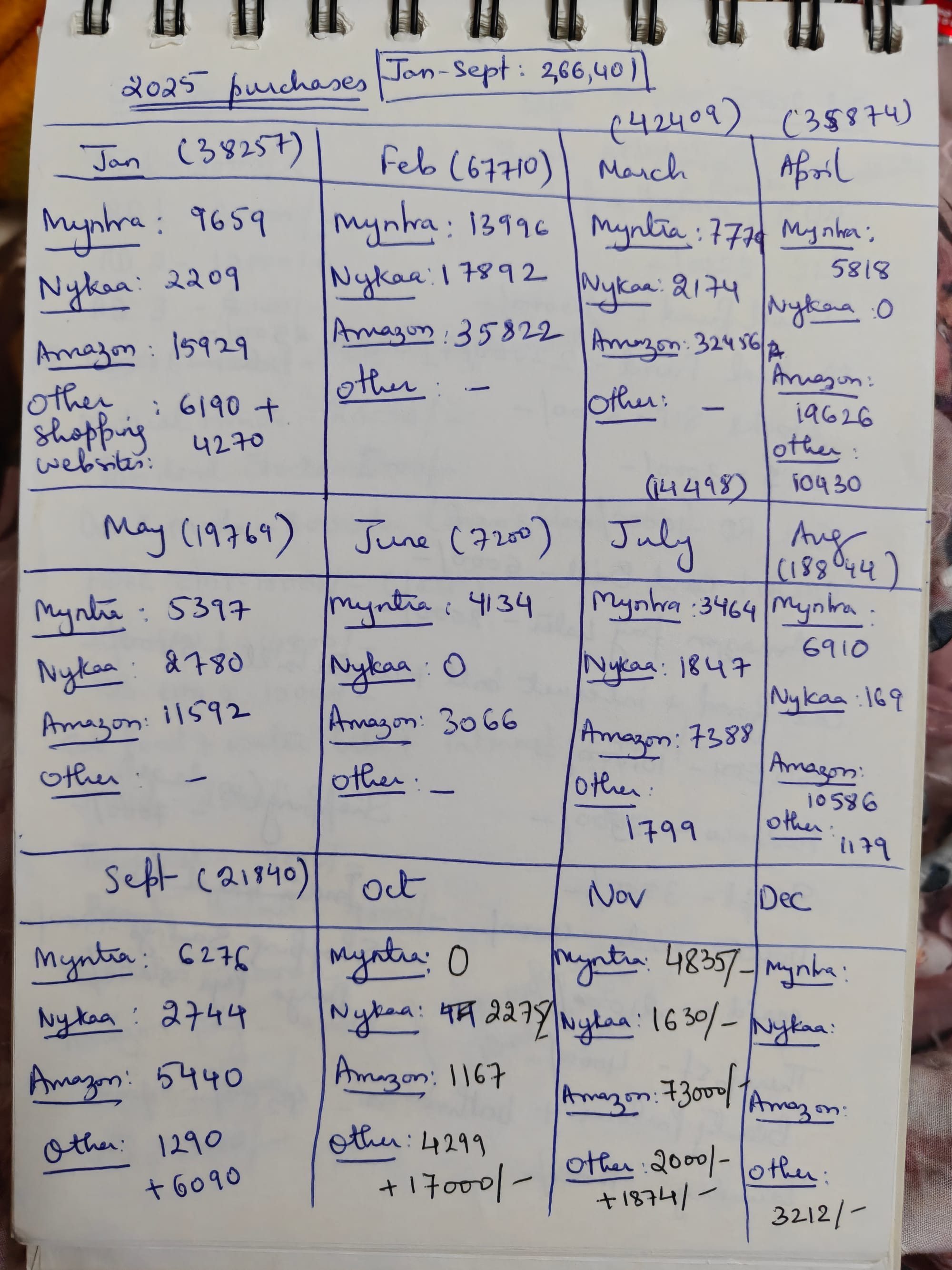
- The second step was to actually sit down and do the math with a pen and paper. Writing the numbers down solidified the situation I was in. I tracked every order through my past WhatsApp and Gmail notifications. Writing made it all too real. I prioritised these categories to begin with and grouped them by shopping websites:
- Clothes
- Furniture / Home Decor
- Amazon
- Books
- Gourmet / Artisanal groceries purchased from random websites
- Beauty Products / Nykaa
It took me about two hours to go through every single purchase, and the result was this:
- The next major step, which was the most time-consuming task, was to audit everything I had. I audited my wardrobe, my pantry, my bookshelf, and my dressing table. I had 37 unread books sitting on my bookshelf, collecting dust, that would take me a good 3-4 years to finish reading! I had 40 tops, 30-odd kurtas, 10-12 pants, 15 sarees, and 8 handbags! Half of my artisanal grocery collection had expired and had to be thrown away.
All I was doing was stuffing more and more in, without taking anything out—or even reviewing what I already had. I had reached a point where I couldn't keep going like this. Not without losing more than money.
Next read - Five Eye-Opening Books I Read in 2025 and the Lessons They Taught Me
The changes I have started making this year
- I started repeating new lines to myself before I opened any shopping app. I have enough. I don't need another version of what I already own. This will not fix what I'm actually feeling. It felt strange at first — almost performative. But I was trying to rewire 33 years of looking at someone else's life and deciding mine wasn't enough.
- I made a list of all the things I wanted to buy in 2026 across all major categories - electronics, clothes, accessories, home goods, and more. I assigned numbers to the clothing items. For example, after my last audit, I realised that I don't have a good white/cream shirt or a solid pair of loafers. I added these to my list of purchases.
- Once I knew what I wanted to buy, I started searching for the products and added them to my Pinterest list. I watched it grow every day and started having fun with the list. I started recognising what I actually liked and how I wanted to build my lifestyle.
- I set up a monthly ₹2-3k flexi deposit only for shopping. If I had my eye on a shirt that cost ₹4k, I knew I had to wait for a month or two to be able to buy it. The waiting was the hardest part of it all. You can have a life-changing plan in front of you, but it can only work if you can give yourself constant reminders of why you started in the first place.
- To identify the triggers of my impulse shopping, I also created another list in my notebook with these categories to track across each month:
- Repeat Purchase - which products am I purchasing on repeat? For example, books or another shade of lipstick
- Planned Purchase - which products and how many items have I planned to purchase, and I am actually buying
- Impulse Purchase - unplanned and unnecessary purchases
- Emotional Purchase - purchases for family or someone close with emotions at the forefront
- Unplanned but Important Purchase - Any trip-related purchase which is necessary, like a woollen cap for a hill station trip.
- To stop thinking about shopping, I started redirecting my money towards multiple sinking funds for experiences I would actually enjoy. Be it travel goals, fitness goals, or my solo dates. This became my new high.
By the third month, I started having shopping fatigue. The idea to do shopping made me instantly tired. One item at a time became a comfortable pace for me, and I am still following that diligently. I have seen some people do no-buy or low-buy months. But when someone has gone through decades of a survival frugality mindset, such restrictions can only trigger impulse shopping.
By no means was I perfect with my progress. There were instances when I was consumed by the idea of shopping because I saw a fashion blogger on YouTube dress up so elegantly that all I wanted was to copy the style. And that resulted in buying clothes in bulk when I had originally intended to spread out my shopping list over the entire year. I gave in to instant gratification. I felt guilty and worried. I criticised myself over it. But I still felt okay. I didn't panic like before. Because I never took money out of my savings or from my budgeted categories of essential expenses, which was still a huge win for me.
Three patterns this audit named for me:
- Survival frugality doesn't disappear when the money arrives. It just finds new clothes to wear.
- The shopping wasn't the problem. The void was.
- For someone wired the way I was, no-buy months would only set up the next binge. Redirect, not restrict.
I'm still in the middle of this. If you want me to come back in six months and write what's actually held up, leave a comment.
If this helped you even in a teeny tiny way, you can support my writing with a coffee ☕, completely optional.
Thanks for reading. See you in the margins.